Airbnb QuickBooks integration without the manual entry
Airflow turns each Airbnb booking-confirmation email into a structured booking and a draft invoice in QuickBooks Online — classed, itemised and waiting for your review.
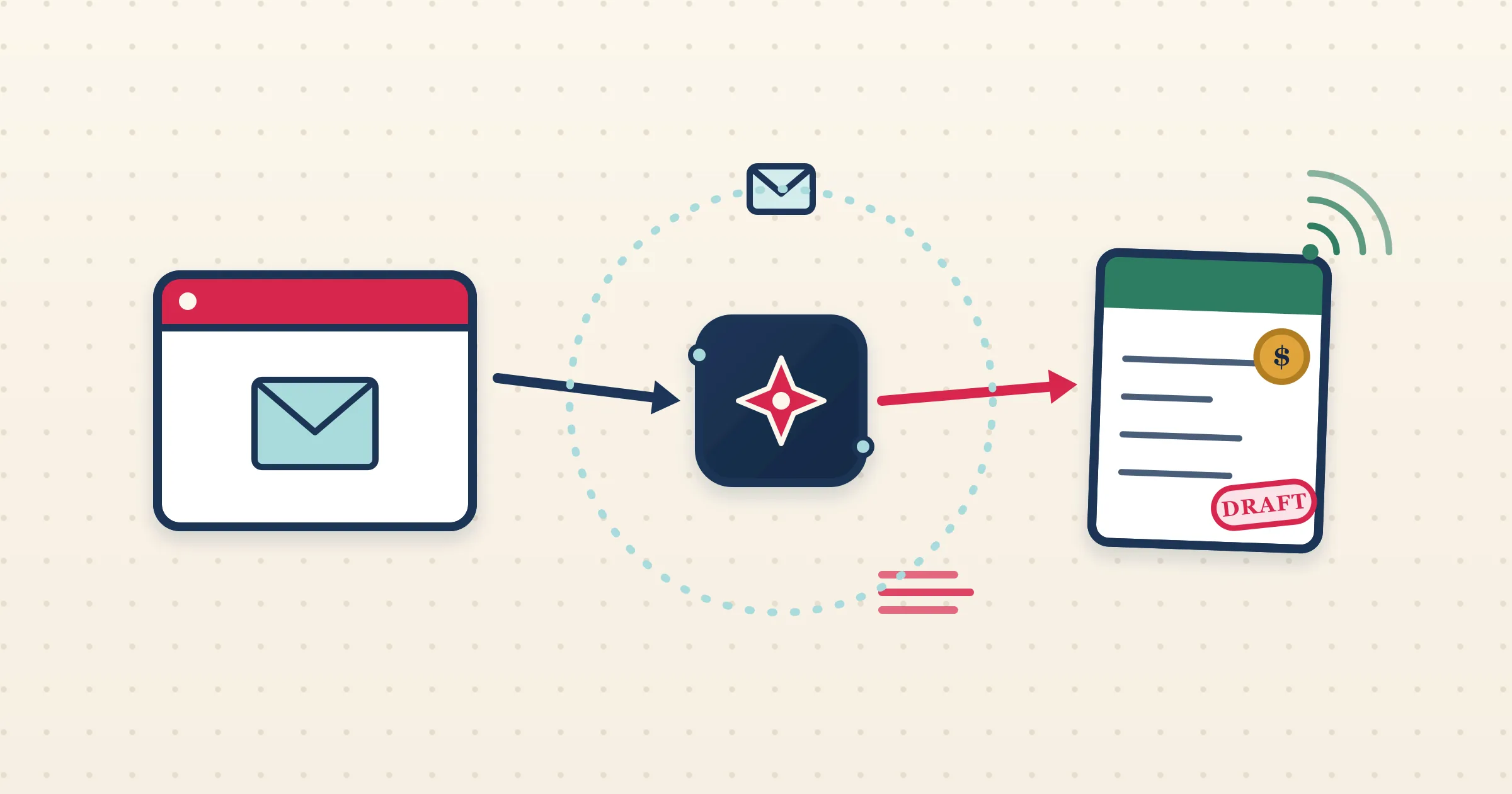
Hosting on Airbnb and reconciling in QuickBooks Online usually means living in two systems that never talk. Airbnb sends a confirmation email; QuickBooks expects a tidy invoice. Bridging them by hand is the part of short-term rental admin nobody enjoys. The Airbnb QuickBooks integration in Airflow removes that middle step entirely: it reads the Airbnb email, understands the breakdown, and drops a draft invoice into QuickBooks Online with the correct class already applied.
How it works
- 1
Let Airflow watch your inbox
Connect Gmail or Outlook for automatic Airbnb email watching, or forward confirmations to your Airflow address. Each reservation email kicks off the pipeline.
- 2
The booking is read in full
Airflow extracts guest, dates, nights, nightly rate, cleaning fee, the Airbnb service fee and any discounts or taxes, storing the complete financial breakdown rather than just a headline number.
- 3
A draft invoice lands in QuickBooks Online
Airflow creates an itemised draft invoice in QuickBooks, applying the QuickBooks class for that property to every line so your reporting stays clean from the start.
- 4
You approve in QuickBooks
The draft is yours to review. Open QuickBooks Online, check the lines, and approve or send. Airflow is Intuit-approved and only ever creates drafts — it does not send or record payment for you.
Classes applied automatically, per property
QuickBooks Online users who run multiple listings rely on classes to see which property earns what. Airflow maps each of your listings to a QuickBooks class and stamps it onto every invoice line it creates, so class-based profit-and-loss reports work without any manual tagging. Configure the mapping once in Airflow and every future Airbnb draft inherits it.
Itemised, not lumped together
Airflow does not dump a single total into QuickBooks. It breaks the reservation into accommodation, cleaning, platform fees and taxes, each on its own SalesItem line. That itemisation makes reconciliation against your Airbnb payout faster and gives your accountant a clear trail. Because the connection is Intuit-approved and runs on live credentials, the drafts behave exactly like invoices you would create by hand — only without the typing.
Built around email, not a fragile API link
Airbnb does not expose a host-level accounting API, so Airflow uses the booking-confirmation email as its trigger. This is deliberate: emails arrive the instant a guest books and do not break when Airbnb redesigns its dashboard. The result is QuickBooks data that is current the day the reservation is made, with nothing to reauthorise on Airbnb.
Common questions
Is the QuickBooks side approved by Intuit?
Yes. Airflow uses an Intuit-approved QuickBooks Online connection running on live credentials. It creates draft invoices only — you approve them.
How does Airflow get my Airbnb bookings?
By reading your Airbnb booking-confirmation emails via Gmail, Outlook or forwarding. There is no direct Airbnb API connection.
Can I see income by property in QuickBooks?
Yes. Airflow applies the QuickBooks class you map to each listing on every invoice line, so class reports break income down per property.
Does Airflow ever send invoices or take payment?
No. Every invoice is a draft for your review. You decide whether to send it and how to record payment.
Put your Airbnb bookings into QuickBooks the easy way
Airflow reads the emails and builds classed draft invoices. You stay in control and approve each one.
Start with Airflow